How to Choose the Right Bird Key Waterfront Home
April 2, 2026
April 2, 2026
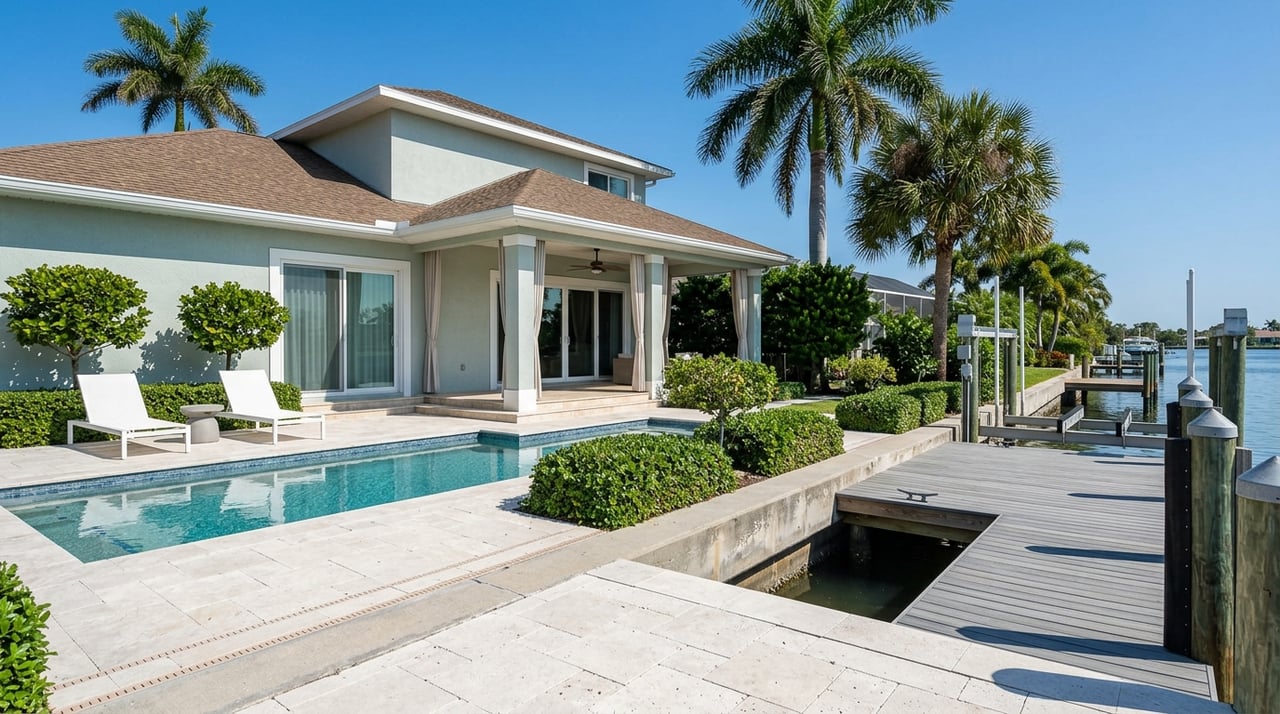
Buying a waterfront home on Bird Key can feel like a dream come true, but not all waterfront is the same. A beautiful photo or broad bay view does not tell you how the dock performs at low tide, how much wake reaches the seawall, or what the flood profile means for your long-term costs. If you want to buy with confidence, you need to look beyond the listing and evaluate how the property actually lives day to day. Let’s dive in.
On Bird Key, the direction and position of a lot can shape your daily experience as much as the house itself. Because the island sits in Sarasota Bay, one property may emphasize open bay views while another may highlight bridge, skyline, or sunset views.
That is why it helps to verify exactly what sits in front of the home, not just that it is labeled waterfront. According to the City of Sarasota planning materials, small changes in frontage can affect whether a property feels open, sheltered, or more exposed. A smart way to compare those sight lines is to spend time at Bird Key Park, a public vantage point known for sunset viewing, fishing, canoeing, and kayaking.
When you tour a home, do not stop at the living room glass or rear patio. The view from the dock, the terrace, and an upper-level room can feel very different on the same property.
This matters for both lifestyle and resale. If you plan to entertain, boat often, or spend evenings outdoors, the best view may not be the one shown in the marketing photos.
For many Bird Key buyers, dockage is just as important as the home itself. A dock that works for the current owner may not work for your boat, your boating habits, or your future plans.
NOAA’s Coast Pilot notes that the John Ringling Causeway Bridge has a fixed vertical clearance of 65 feet. That can work well for many vessels, but bridge clearance is only one piece of the puzzle. You still need to confirm your full route from the dock to open water.
Bring your boat’s specs with you when you evaluate a property. That includes:
You should also ask practical questions before moving forward:
NOAA also notes that Sarasota Bay connects through New Pass and Big Sarasota Pass, and that currents are part of the navigation environment. In real life, that means a map review is not enough.
One of the most useful steps is a live boat ride during a normal, busy time of day. The local Sarasota boating guide advises boaters to keep right in channels, slow down under bridges, and reduce wake near smaller vessels, which shows how much conditions can change once traffic builds. What feels easy on paper may feel much different on the water.
A peaceful waterfront setting during a weekday showing may not reflect what you will experience on a weekend afternoon. On Bird Key, wake exposure and nearby activity can affect comfort, privacy, and how enjoyable your dock feels.
Florida Fish and Wildlife Conservation Commission boating rules define idle-speed/no-wake and slow-speed minimum-wake operation, and Sarasota County manatee protection zones and boating-restricted areas are part of the local boating environment. That means wake is not only about comfort. It also connects to local rules and wildlife protection.
Bird Key Park and the causeway create public access nearby. The city describes Bird Key Park as a popular place for fishing, biking, sunset viewing, canoeing, and kayaking.
For some buyers, that nearby activity feels vibrant and scenic. For others, it may affect privacy, noise, parking patterns, or how they use outdoor spaces. The best way to know is to visit at different times of day and on different days of the week.
Even in a luxury waterfront purchase, day-to-day access still matters. Your route on and off Bird Key can shape your commute, showing schedule, and first impression every time you come home.
As of March 2026, FDOT is improving SR 789 from east of Sunset Drive to Bird Key Drive, with lane closures anticipated and completion scheduled for early 2027. Before you make a decision, review the SR 789 John Ringling Causeway project fact sheet and test your drive under realistic conditions.
One of the biggest mistakes buyers make is treating flood risk and insurance as late-stage details. On Bird Key, those items belong near the top of your due diligence list.
FEMA states that the Flood Map Service Center is the official public source for flood hazard information. Sarasota County also notes that all properties have some flood risk, even if mapping changes over time.
Before you decide a home is affordable to own, request and review:
This is especially important because Sarasota County guidance outlines elevation requirements for coastal zones such as AE, AH, VE, and Coastal A/LiMWA. Two waterfront homes with similar prices can carry very different ownership costs depending on flood profile and documentation.
A seawall is not just a line item on a feature sheet. Its condition, age, and permit history can affect insurance, financing, future repairs, and your ability to make shoreline improvements.
Sarasota County’s environmental permitting guidance makes clear that shorelines, canals, docks, seawalls, mangroves, wetlands, and related coastal features may trigger environmental review. The county also warns that no clearing or site preparation should begin before approval.
When you are serious about a property, ask for:
If modifications were made without proper approval, that can create complications later. Clean records usually make a property easier to evaluate now and easier to market in the future.
The county Water Atlas notes that shoreline vegetation, especially mangroves, may help reduce property loss and save lives during storms. That means vegetation along the water should not be viewed only through a cosmetic lens.
If a shoreline has mangroves or other regulated features, make sure you understand what can and cannot be altered. That conversation should happen before closing, not after.
Bird Key is not just a collection of waterfront lots. It also has a homeowners association with restrictions and lease requirements, and those rules should be part of your property review from the beginning.
The city planning materials identify Bird Key as primarily developed with single-family homes, and they note the HOA framework that shapes ownership expectations on the island. Before you assume a property will work for seasonal use, a future investment hold, or your preferred ownership structure, review the current Bird Key Homeowners Association information carefully.
The right waterfront home should serve you now and still be easy to understand when it is time to sell. On Bird Key, resale is often driven by lot-specific factors more than broad neighborhood averages.
The properties that tend to be easier to compare and market later are often the ones with straightforward boating access, clear shoreline documentation, solid seawall records, and a flood profile buyers can understand early. In other words, due diligence is not just about avoiding risk. It is also about protecting future value.
If you want to compare homes more confidently, use a consistent process every time you tour.
This kind of side-by-side review helps you move past surface appeal and focus on how each property really performs.
Buying on Bird Key is about more than choosing a beautiful home. It is about selecting the right mix of views, boating function, shoreline condition, insurance profile, and long-term usability for your lifestyle. If you want a concierge-level approach to evaluating Bird Key waterfront opportunities, connect with Christa Spalding for personalized guidance.
Stay up to date on the latest real estate trends.
July 23, 2026

July 16, 2026
July 9, 2026
July 2, 2026
June 25, 2026
June 18, 2026
June 11, 2026
June 4, 2026
May 28, 2026
With a passion for service, Christa is ready to help with your home buying and selling needs. As a proud member of Coldwell Banker Realty, Christa carries the values of hard work, integrity, and outstanding client service into everything she does.