Lido Key Condo Special Assessments: What Buyers Must Review
September 3, 2026
September 3, 2026
Search Gulf-front condos on Lido Key right now and you'll find two units listed within striking distance of each other in price, both facing the same stretch of sand, both roughly the same square footage. On paper they read as interchangeable. They are not. One sits in a building constructed in the 1970s. The other is new construction with a certificate of occupancy still years away from triggering any state inspection requirement. That single difference, not the view, not the finishes, not even the exact list price, is what will actually determine what each unit costs its owner over the next five years.
This is the part of the Lido Key condo market that doesn't show up in a median price headline. The number that matters most to a buyer here isn't what a unit is listed for. It's where the building sits on Florida's post-Surfside inspection and reserve-funding timeline, because that timeline decides whether the next big bill lands on the seller's side of closing or the buyer's.
Florida passed Senate Bill 4-D in May 2022, less than a year after the Champlain Towers South collapse in Surfside killed 98 people. The law created two obligations that now apply to every condominium and cooperative building three stories or taller in the state, and both land hardest on the kind of pre-1980s low-rise construction that lines Benjamin Franklin Drive.
The first is the milestone inspection: a structural evaluation by a licensed engineer or architect, required once a building reaches 25 years old if it sits within three miles of the coast, or 30 years inland. Lido Key's older Gulf-front stock crossed that 25-year threshold years ago. For buildings that hit the threshold in 2026, GoverningDocs says the deadline to complete the inspection is December 31 of that year.
The second obligation is the Structural Integrity Reserve Study, or SIRS, a professional assessment of what the building's major structural components will cost to maintain and how much the association needs to be setting aside now. LegalClarity explains that before this law, Florida associations could vote to waive or reduce those reserve contributions, which kept monthly dues artificially low for years at a time. That option ended for budgets adopted on or after December 31, 2024. Associations that had been deferring structural reserves to keep fees comfortable no longer have that choice, and the bill for years of underfunding is arriving in the form of special assessments.
Sellers are also now required to hand over the milestone inspection summary and the SIRS, or a written statement that one hasn't been completed, before closing. That disclosure requirement comes from Florida Statute 718.504, and buyers get a statutory review window to review the association's governing documents.
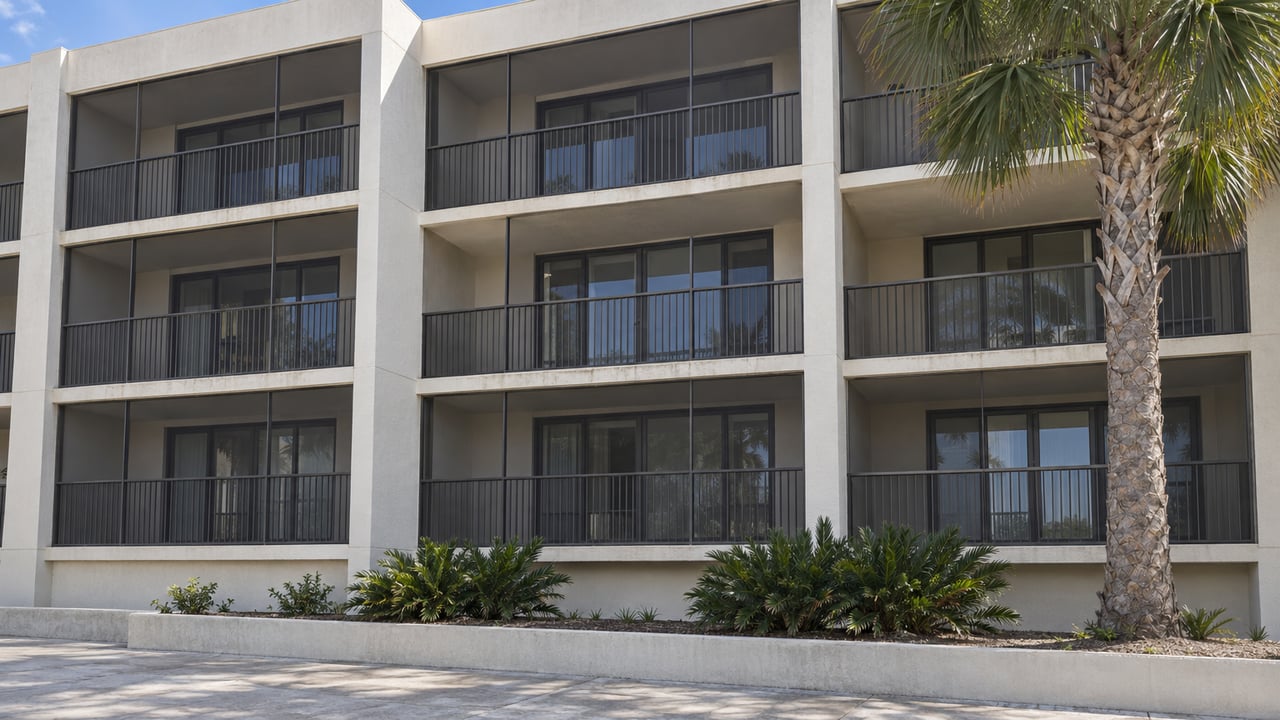
To see how this plays out in practice, it helps to look at the actual cohort split on the island. Buildings like Lido Beach Club, built in 1974, and Lido Ambassador, built in 1978, represent one end of the spectrum: original construction, past the 25-year threshold, and reserve studies that are now legally required to reflect real repair costs rather than optimistic assumptions. On the other end sits new construction like Rosewood Residences Lido Key, currently under development with an anticipated delivery in fall 2026. A building completed this year won't face its first milestone inspection until it approaches the 25-year coastal threshold, sometime in the 2050s.
| Pre-1980 Gulf-front cohort | New construction (2020s delivery) | |
|---|---|---|
| Milestone inspection status | Already triggered, ideally completed | Not due for roughly 25 years |
| Special assessment history | Frequently $15,000 to $80,000 or more per unit for concrete restoration, balcony repair, or roof replacement | No history yet, by definition |
| Typical monthly dues | Roughly $800 to $2,300+ for older beachfront buildings | Higher baseline tied to concierge and amenity level, but backed by fully funded reserves |
That table is the whole argument in miniature. A lower asking price on an older unit can look like value until the SIRS and the special assessment history are on the table. A higher asking price on new construction can look expensive until you price in the two decades before that building faces its first inspection.
Even with the disclosure rules now in place, the special assessment surprise remains one of the most common ways a Lido Key deal goes sideways late in the process. The estoppel certificate, the document that confirms a unit's financial standing with the association, is often one of the last pieces of paper to arrive before closing. When it lands and reveals an assessment nobody discussed at the offer stage, buyers are left renegotiating price, asking the seller to cover the cost at closing, or walking away and losing time already spent on inspections and appraisal.
This isn't a hypothetical risk specific to a handful of unlucky buyers. It's a structural feature of buying into a decades-old building mid-cycle: the SIRS surfaces a funding gap, the board votes on a special assessment to close it, and depending on timing, that vote can happen after a unit is already under contract. Florida Statute 718 requires associations to disclose pending or approved assessments in the estoppel certificate, but pending is the operative word. A board that hasn't voted yet has nothing to disclose, even if the SIRS already flagged the shortfall.
For any Lido Key condo in a building older than roughly 1995, there's a short list of documents worth requesting before you're deep into a contract rather than three days before closing:
An association that can't produce these on request, or takes weeks to do it, is itself useful information.
Monthly HOA dues on Lido Key span a wide range, from roughly $447 in older, non-beachfront buildings to more than $9,000 in the island's most amenity-heavy beachfront towers. The instinct is to compare that number directly across buildings, but the fee alone tells you almost nothing about risk. A low monthly number attached to underfunded reserves is a special assessment waiting for a trigger. A higher monthly number attached to a fully funded SIRS is simply the honest, current price of ownership. The question worth asking isn't what the dues are today. It's what the reserve study says they should be, and whether the association is actually funding that number.
Does every condo on Lido Key need a milestone inspection? Only buildings three habitable stories or taller fall under the law. Smaller low-rise buildings and single-family homes are exempt.
If a building already completed its SIRS, does that mean no more assessments? Not automatically. A SIRS documents what should be funded going forward. If the association is behind on contributions relative to that study, a special assessment can still follow. Ask for the funded percentage, not just the existence of the report.
Is an older building automatically a worse investment? Not necessarily. Many pre-1980s buildings have already crossed the inspection threshold and addressed deferred maintenance, which can put some of the risks that concern buyers behind them. The building that hasn't gone through the process yet is the one that deserves closer scrutiny.
The median price on any Lido Key listing is a starting point, not an answer. The number that actually determines what a condo here will cost to own is buried in the SIRS and the milestone inspection file, documents that describe a building's real financial condition rather than its curb appeal. Buyers who ask for that paperwork before writing an offer, not after, can assess potential costs earlier in the process.
If you're comparing Lido Key buildings and want a second set of eyes on the reserve study before you go under contract, reach out to Christa Spalding. Let's Connect.
This article is general information, not legal, tax or financial advice. Consult a qualified professional about your situation.
Stay up to date on the latest real estate trends.
October 22, 2026
October 15, 2026
October 8, 2026
October 1, 2026
September 24, 2026
September 17, 2026
September 10, 2026
September 3, 2026
August 27, 2026
With a passion for service, Christa is ready to help with your home buying and selling needs. As a proud member of Coldwell Banker Realty, Christa carries the values of hard work, integrity, and outstanding client service into everything she does.