At the Lido Beach Pavilion, the Murals Have a Plan and the Pool Is Still Waiting
November 12, 2026
November 12, 2026
On the wall of the Lido Beach Pavilion, two painted seahorses frame a crowd of bathers, a lifeguard tower and a gray Navy ship labeled USS Sarasota. The scene is Tim Jaeger's "Famous Lido Beach Casino," painted in 2020 with help from the community. A few steps away is the 25-meter lap pool, the one piece of that Casino still in use until the City of Sarasota closed it on June 8.
The painting and the pool now face very different futures. The painting has a $4,000 plan behind it. The pool needs about $429,000 that has not been secured. The gap between them comes down to which pot of City money each one draws on.
Ralph Twitchell, a founder of what became the Sarasota School of Architecture, designed the Lido Beach Casino as a Works Progress Administration project. It opened in May 1940 with a competition-size pool, the Casa Marina Ballroom, the Sunset Room facing the Gulf, a shipwreck-themed bar called the Castaways, and seahorse sculptures along the second-floor balcony. In 1964, voters approved a $250,000 bond to renovate it. City engineers found the building structurally sound, but commissioners changed course, and by the end of March 1969 the Casino had been torn down.
The pool survived. The City's own project briefing on the Lido Beach Pool calls it "the last remaining component of the historic Lido Beach Casino."
The pavilion around the pool has been close to a rebuild once before. In 2018, a private operator proposed a $3.5 million redevelopment with pool shade structures, cabanas, a splash pad, playgrounds, a Tiki bar and a bigger restaurant, as the Sarasota Herald-Tribune reported. In February 2019, the City Commission voted to end that lease and repay $206,224.69 in planning costs, and the developer dropped its plans, according to Your Observer.
The briefing, last updated July 10, 2026, describes an outdated, damaged electrical system and a pool surface that has deteriorated significantly over time. In its current condition, the pool needs constant maintenance to keep black algae from forming on and working into the marcite, which has meant inconsistent hours and expensive upkeep. The City's estimate breaks down this way:
The briefing says all the quotes are in hand. Once funding is confirmed, the work would take another five to six months of closure. That means even an approval this winter would not reopen the pool for most of the 2026–27 season.
The heater and chiller would change how the pool operates, not just fix it. Under the City's current rules, the pool closes whenever the water drops below 76 degrees. The briefing expects temperature control to improve water quality and keep operations more consistent.
The briefing also shows how lopsided the pool's budget has been. On average, the pool costs $148,000 a year to run and takes in $11,900 from users, with about 4,760 passes sold a year. That works out to roughly $31 in operating cost for every pass sold, against about $2.50 in revenue per pass. The City's own document says that "current usage levels and operational expenses may not fully align with community needs."
In August, a resident wrote to all of the city commissioners. She said the Lido Pool "has significant historical value and is one of only three public beachfront pools in the area," and that it was regularly full of lap swimmers. The Sarasota News Leader reported that City Manager Karie Friling replied that "any future decisions regarding next steps and/or improvements to the [Lido] pool are on hold until after the November referendum results." The same outlet reported that property taxes were estimated to make up 52% of the City's General Fund for the 2027 fiscal year.
That referendum was Amendment 3. WUSF reported that it passed statewide with 61.98% of the vote, just above the 60% it needed. In Sarasota County, it drew 62.6% in unofficial returns, according to Longboat Key News. The state canvassing commission was scheduled to certify the results on Nov. 17. As WUSF summarized it, the amendment raises the homestead exemption on non-school property taxes to $150,000 in 2027 and $250,000 in 2028, cuts the yearly assessment cap on non-homestead property from 10% to 5%, and doesn't change school taxes. That summary is general information, not tax or legal advice. Anyone wondering how it affects their own bill should ask their tax professional or the Sarasota County Property Appraiser.
On Nov. 4, the City said in its statement on Amendment 3 that it expects to lose an estimated $5.6 million in revenue once the amendment is fully in place, with that figure growing each year with inflation. Friling said it would be "premature to speculate about specific service reductions" before a full financial analysis. The statement says staff will bring recommendations on priorities and service delivery to the City Commission. It does not mention the pool. The pool's repairs remain unfunded as that analysis begins.
The second Jaeger mural on the pavilion, "Car Caravan to Lido for Wade-In Protests," honors the 1955 wade-ins. As Longboat Key News recounted, that fall Neil Humphrey Sr., president of Sarasota's NAACP chapter and owner of Humphrey's Pharmacy, led caravans of residents from Newtown to Lido Beach, where they walked the shoreline and waded into the Gulf. At the time, fewer than two miles of Florida's 825 miles of beaches were open to African Americans. The U.S. Civil Rights Trail, which now includes Sarasota, credits the Newtown caravans with helping bring the phrase "wade-in" into the movement's vocabulary.
Both murals went up in September 2020. The Arts and Cultural Alliance of Sarasota County and a community task force organized the project, and residents painted alongside Jaeger. The murals sit on City property, but the City never formally added them to its collection. In an Oct. 8 note to the City's public art administrator, quoted by Longboat Key News, Jaeger wrote, "There was never a signed contract/agreement exchanged," and offered to restore the murals himself.
A staff proposal that went to the City's Public Art Committee on Nov. 4 would add both works to the City's Florida Legacy Arts mural series. It includes a formal artist agreement, a $3,500 restoration led by Jaeger that would take several days, up to $500 for interpretive plaques, and spots for the murals in the City's art inventory and Otocast audio tours. Staff recommended approval, subject to legal terms, contracting rules and coordination with Parks and Recreation.
Here's why the murals' plan can move while the pool's waits. Sarasota's public art program is paid for by developer contributions, not property taxes. Under the Public Art Plan 2030, Longboat Key News reported, the City doubled that contribution from 0.5% to 1% of construction cost for projects of $1 million or more.
| Lido Beach Pool | Pavilion murals | |
|---|---|---|
| Tie to the 1940 Casino | Last surviving piece | Painted memory of it |
| Proposed cost | About $429,000 | Up to $4,000 |
| Funding | Not yet secured, with decisions held for the property-tax vote | Developer public art contributions |
| Time needed once approved | Five to six months | Several days |
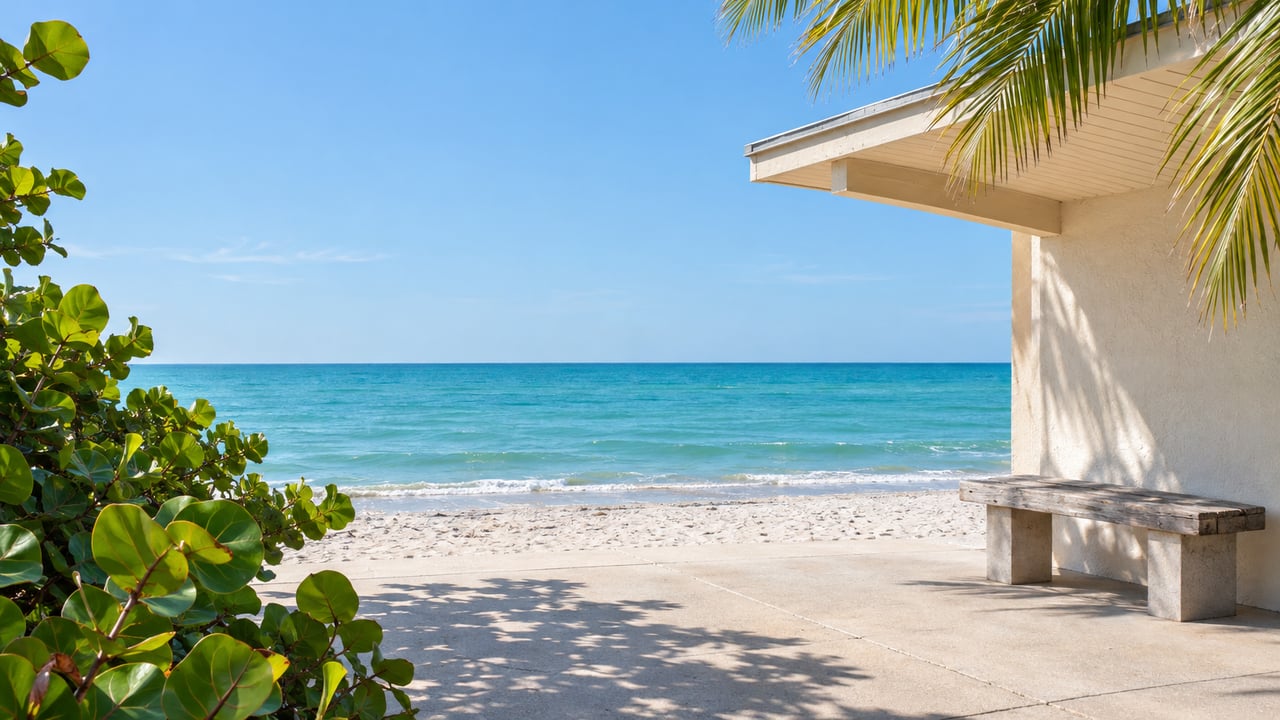
The beach, the restrooms and the murals are all still there for an afternoon on Ben Franklin Drive. Here's what's available while the pool stays closed:
The Lido Beach Pavilion is one of the places that makes the island feel like home, and I'm watching the pool's next steps as closely as you are. If you'd like to talk about life on Lido Key, how City budget decisions reach the barrier islands, or anything about your own plans here, Christa Spalding is glad to help. Let's Connect.
Stay up to date on the latest real estate trends.
November 12, 2026
November 5, 2026
October 29, 2026
October 22, 2026
October 15, 2026
October 8, 2026
October 1, 2026
September 24, 2026
September 17, 2026
With a passion for service, Christa is ready to help with your home buying and selling needs. As a proud member of Coldwell Banker Realty, Christa carries the values of hard work, integrity, and outstanding client service into everything she does.